


Gelatin Iceberg Sensory Play: How to Make Taste-Safe Sensory Play
Updated: Jan 11
In this BLOG post I will teach you how to make gelatin icebergs for sensory play.

There’s something magical about watching toddlers discover the world through their senses.
When their hands sink into something cool, wiggly, and unexpected, you can almost see the learning happening.
They explore and find answers to questions such as:
How does it feel?
What happens when I squeeze it?
Is it hot or cold? Soft or hard? Big or small?
Sensory play offers an incredible number of
Check out our E-Book: A Complete Guide to Sensory Play HERE! This Guide was created specifically to provide meaningful sensory-play opportunities for your child or student. Through those opportunities, they will strengthen fine & gross motor skills, enhance opportunities to develop language & vocabulary & practice important social skills.

Why use gelatin?
Gelatin is one of my favorite sensory materials for toddlers because:
It’s cool and squishy without being messy or sticky
It’s taste‑safe for curious mouths
It offers resistance, which strengthens little hands
It creates a slow, calming pace of play
It’s incredibly easy to customize with colors, shapes, and themes
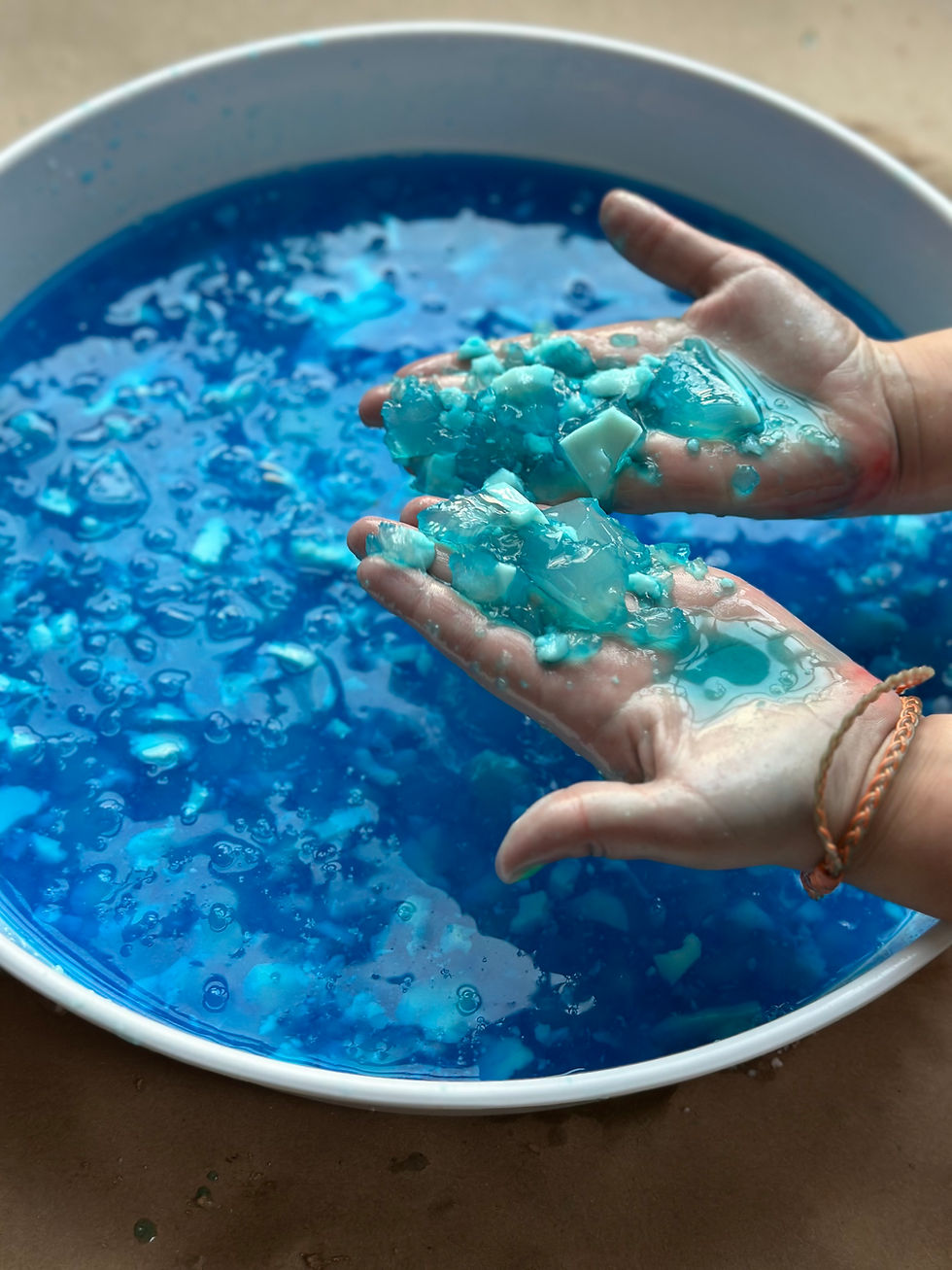
For this setup, gelatin becomes a soft, shimmering “iceberg” that toddlers can poke, scoop, rescue animals from, or simply explore with their hands.
You get to decide what is safe and manageable in your home. Always monitor young children.
Materials:
Gelatin packet
Water
Bowl
Mixing spoon
Sensory bin or bowl
Blue food coloring
Winter animals
Milk (optional)
Step 1: Make the gelatin according to the directions on the box.
Step 2: Add a cup of milk. You can skip this part, all it does is add a white color. We have also made this using a splash of white paint- it will NOT be taste-safe if you do this. There is also nothing wrong with keeping it as is, it is so soft and squishy and fun!
Step 3: Let the gelatin set for a few hours in the refrigerator.
Step 4: In a sensory bin or bowl, add water and a few drops of blue food coloring. Mix.
Step 5: Slice the iceberg into chunks and add it into the water. Add in winter animals and PLAY!
Want a FREE printable activity card? Download it HERE!

This activity is FULL of developmental benefits:
Fine motor skills as children scoop, pinch, and dig
Sensory regulation through cool temperatures and soft textures
Language development as you narrate: “squishy,” “cold,” “slippery,” “rescue”
Early science concepts like melting, sinking, and cause‑and‑effect
Imaginative play as toddlers create stories with the animals
It’s a beautiful blend of sensory exploration and early learning—without feeling like “work.”
APFL tips:
Always supervise toddlers during sensory play
Taste-safe does not mean encourage kids to eat it! It just means it is a safer option if they do sneak a bite. I still discourage with simple language such as, "Not food!"
Place a towel or mat underneath for easy cleanup
When finished, dispose of gelatin in the trash (not the sink)
Ways to extend your learning and play
If your child is captivated, try:
Adding warm water to “melt” the iceberg
Freezing a second tray for a firmer, colder version
Pairing the activity with arctic books or songs
Creating a small‑world scene with cotton “snow” and rocks
Little ones love returning to familiar setups with a new twist.
Gelatin Iceberg Sensory Play is one of those activities that feels almost too easy—but the engagement is real, the learning is rich, and the joy is undeniable.
Whether you’re a parent, teacher, or caregiver, this is a beautiful way to slow down, connect, and let your child explore at their own pace.
If you try it, I’d love to hear how your little explorer enjoyed their icy adventure.
Are you looking for more Winter-themed activities? Check these out:


Comments