


DIY Sensory Balloons: How to Make Sensory Balloons for Self-Regulation at Home and at School
In this post, you’ll learn what emotion balloons are, how to make them, how to use them, and why they are such a powerful regulation tool for toddlers and kids of all ages.
What Are Sensory Balloons?
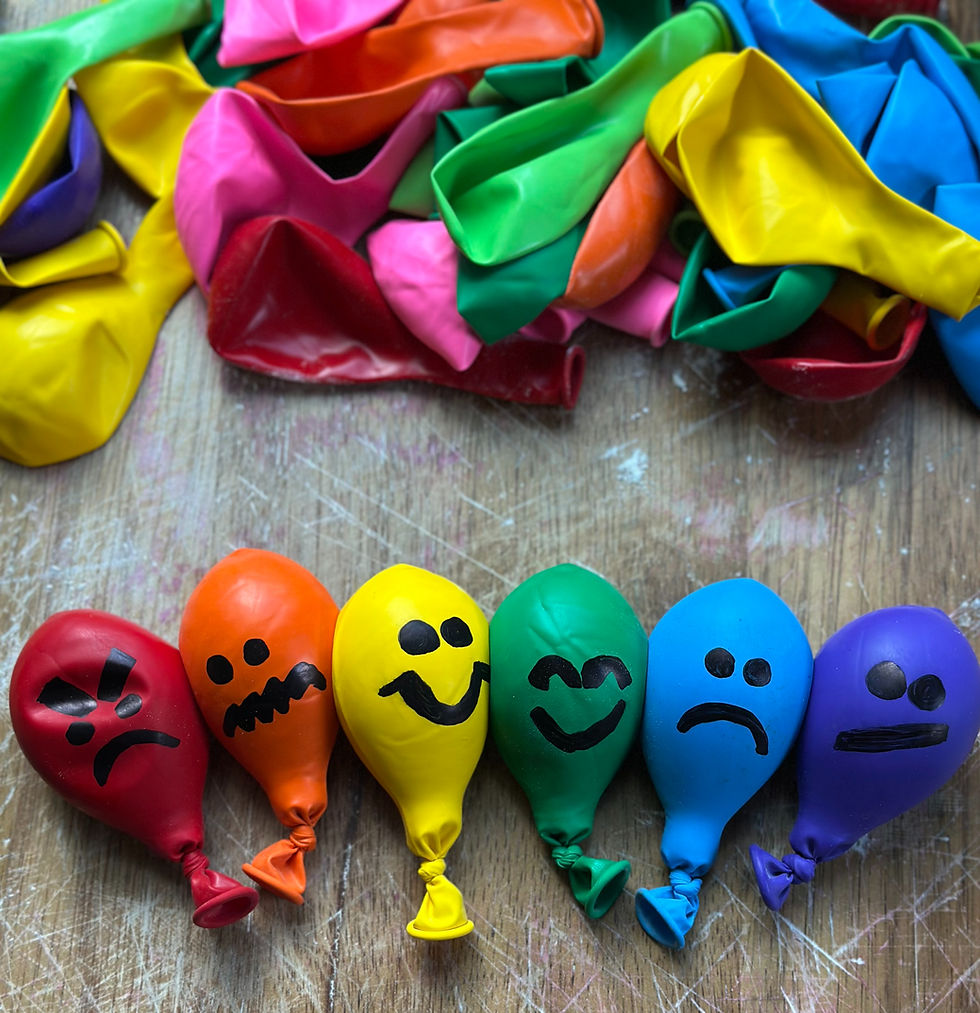
Sensory balloons are DIY sensory tools made by filling balloons with soft materials like flour or play dough and drawing simple emotion faces on them. Each balloon represents a different feeling, like mad, sad, calm, excited, or worried.
They are part of a growing movement in early childhood support that focuses on regulation through the body rather than relying on verbal instruction alone.
Instead of telling a child to “calm down,” emotion balloons give them something physical to squeeze, hold, and interact with while their nervous system settles.
This supports the idea of body before brain, meaning:
A regulated body creates space for a regulated mind.
Why Emotion Regulation Starts with the Body
When a toddler becomes overwhelmed, their brain shifts into a stress response.
In this state:
Language skills decrease
Problem-solving becomes difficult
Listening shuts down
Emotions feel very big and immediate
Before a child can process words like “calm down” or “use your words,” their body needs help returning to a calm, grounded state. Sensory input, like squeezing, pressing, and feeling resistance helps send calming signals to the nervous system.
Emotion balloons provide exactly that: deep pressure input through play.

How Sensory Balloons Help Behavior
Sensory balloons support behavior in three important ways:
1. They regulate the nervous system
Squeezing provides calming proprioceptive input (deep pressure through muscles and joints), which helps the body slow down.
2. They give emotions a visual identity
Toddlers often feel emotions before they can name them. Seeing a “red angry balloon” or “blue sad balloon” helps connect feelings to something concrete.
3. They create a safe outlet for expression
Instead of hitting, throwing, or melting down, children can squeeze, press, and release energy safely.
Over time, this helps reduce the intensity and duration of emotional outbursts.
How to Make Emotion Balloons (Step-by-Step)
One of the best parts of this activity is how simple it is to create. You only need a few household materials.
Materials:
Balloons
Flour
Sharpie marker
Funnel
Scoop
Something thin to push flour down
How-To:
Choose a balloon color that matches an emotion (red, blue, green, etc.) or just use any colors that you have
Use a funnel to add flour into the balloon
Gently push out extra air and tie the balloon tightly to seal it
Add a second balloon layer for durability (optional)
Draw a simple face on each balloon (optional)
Squeeze and use during big feelings or calm moments to teach and model how to label and identify emotions
Want a FREE printable with the directions? Click HERE.

Proactive Use: Teach During Calm Moments First
One of the most important parts of this tool is when you use it.
Emotion balloons are most effective when introduced during calm, connected moments—not in the middle of a meltdown.
During calm times, you can:
Show your child each balloon
Name the emotion simply (“This is the mad balloon”)
Let them explore squeezing each one
Model matching feelings to faces
Play simple games like “find the calm balloon”
This builds emotional vocabulary without pressure.
Think of this as planting seeds. When a child later becomes upset, the tool is already familiar.
They don’t have to learn it in the moment, they’ve already experienced it!
Using Emotion Balloons During Big Feelings
Once a child is familiar with the balloons, they can also be used during emotional moments.
Try simple, low-pressure language like:
“Your body feels like the red balloon right now.”
“Let’s squeeze together.”
“Show me which balloon feels like your body.”
The goal is not to stop the emotion, it’s to help the body move through it.
As the child squeezes, their nervous system begins to regulate, which naturally supports calmer behavior.

Emotion Balloons and Body Before Brain
Our phrase body before brain is central to understanding why this tool works.
When a child is dysregulated:
The body is in charge
The brain is offline
When we support the body first through movement, pressure, or sensory input the brain can slowly come back online.
Only then can a child begin to:
Listen
Connect
Problem-solve
Communicate
Emotion balloons support this process in a gentle, playful way that feels safe for children and practical for parents.
Why Families and Teachers Love This Tool
Emotion balloons are becoming popular because they are:
Simple to make at home
Low-cost and accessible
Engaging for toddlers
Easy to use in real-life moments
Supportive without requiring perfect parenting strategies
Most importantly, they give families a tangible way to support emotional development without relying on long explanations during stressful moments.
Instead of trying to “talk a child out of a meltdown,” parents can offer a tool that works with the body instead of against it.
Final Thoughts
Emotion balloons are more than a craft—they are a simple regulation tool rooted in the idea that behavior starts with the body.
By introducing them during calm moments and using them consistently, toddlers begin to:
Recognize their feelings
Connect emotions to their body
Develop early regulation skills through play
Most importantly, they learn that big feelings are not something to fear or fight—but something their body can move through safely.
When we support the body first, we make space for calmer behavior, stronger connection, and more confident emotional growth.
Want to learn more about DIY self-regulation tools?
Check these out:


Comments